A porch adds charm, comfort, and value to your home. Whether it’s a cozy front entry or a relaxing back retreat, proper porch construction ensures your space is safe, durable, and beautiful. This guide explains how to build a porch step by step, from planning and materials to roofing and maintenance. You’ll also learn when to handle a small project yourself and when to call trusted experts like Elements Home Exteriors.
By the end, you’ll understand how to design and build a porch that fits your lifestyle, budget, and home design.
Why Building a Porch Adds Value and Comfort to Your Home
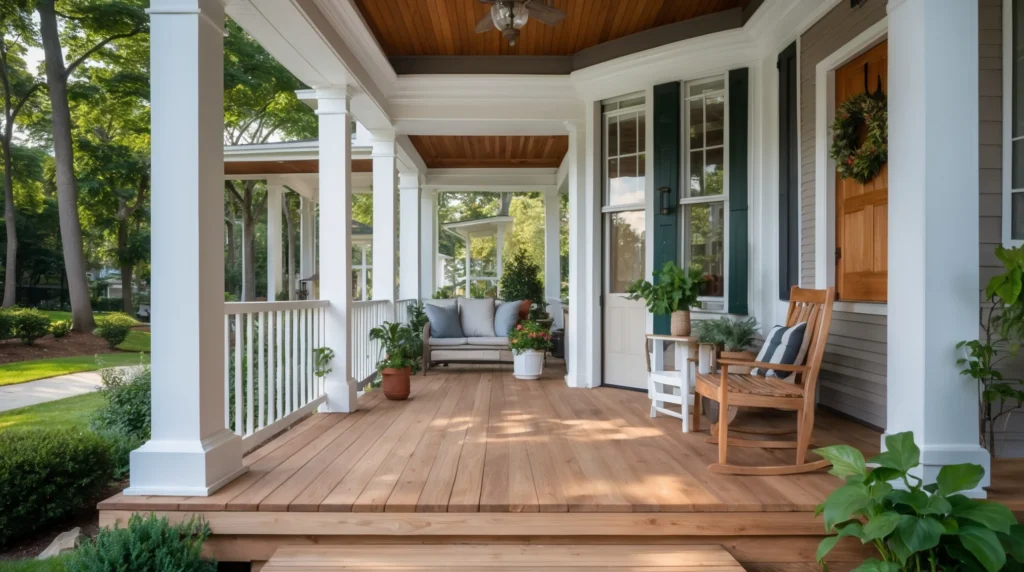
Adding a porch does more than improve curb appeal. It extends your living space and creates a welcoming spot to relax. A well-built porch can protect your entryway from rain and sunlight while offering a comfortable area for gatherings or quiet moments outdoors. Porches also add significant resale value. Buyers love homes with functional outdoor spaces, and even a small porch can make your home look more complete. From rustic wooden porches to sleek modern decks, every style adds its own charm.
When you invest in proper porch construction, you’re building something that enhances both your home’s function and personality.
Understanding the Basics of Porch Construction
Before starting your project, it’s important to understand the basics of building a porch. Every porch, no matter its size, relies on three key elements: structure, design, and durability. The structure includes framing, posts, and foundation; design covers shape and aesthetics; and durability depends on material quality and weather protection. A porch usually starts with a solid base of concrete, wood framing, or composite decking. Then come the posts and beams that support the roof and flooring. Porch flooring can be made from treated lumber, natural wood, or synthetic materials like composite boards. Finally, roofing protects the porch from the elements while matching your home’s design.
Each layer works together to create a strong, attractive outdoor space that can last for decades with the right maintenance.
Planning Your Porch: Design, Size, and Function
Planning is the most important part of porch building. Before you pick up a hammer, decide how you’ll use your porch. Will it be a small front porch for decoration, a covered space for morning coffee, or a large back porch for entertaining?
Start by sketching your ideas. Consider the porch’s location, orientation, and size. A front porch might need steps, railings, and lighting, while a back porch could include built-in seating or space for a grill. Think about roof design, too; a gable or shed roof changes both the look and the feel.
Also, plan for local building permits and neighborhood guidelines. These help ensure your porch construction meets safety and zoning requirements.
How to Build a Porch Step by Step
Building a porch follows a clear process. Whether it’s a front porch construction or a back porch addition, the main steps stay the same.
Step 1: Prepare the site.
Clear the area and make sure the ground is level. Mark where the posts and supports will go.
Step 2: Build the foundation.
Pour concrete footings or use post anchors to hold the structure. A stable base prevents sagging and shifting over time.
Step 3: Frame the porch.
Attach beams and joists to create the porch’s skeleton. This supports the flooring and connects to the house structure.
Step 4: Install the flooring.
Use treated lumber or composite boards. Align them evenly and leave small gaps for water drainage.
Step 5: Add the roof.
The porch roof construction is critical for protection. Use durable rafters, waterproof sheathing, and shingles that match your home.
Step 6: Finish and decorate.
Add railings, trim, paint, or stain. Decorate with plants, chairs, or lighting to make it feel welcoming.
Following these steps ensures your porch is strong, balanced, and visually appealing.
Choosing the Right Materials for Porch Construction
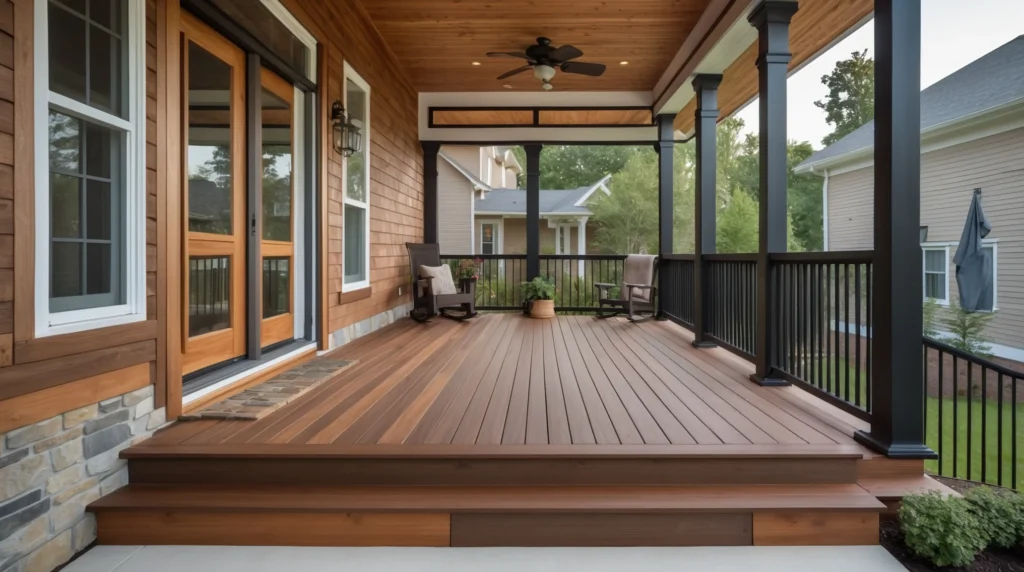
Your materials decide how long your porch lasts. The best material choices depend on climate, budget, and the look you want.
Wood: Traditional, warm, and natural. Pressure-treated wood resists decay but needs sealing or staining every few years. Cedar and redwood are popular for their natural resistance to moisture and insects.
Composite decking: Made from recycled wood and plastic, it resists rot, fading, and cracking. It’s more expensive upfront, but lasts longer and needs less maintenance.
Concrete: Great for durability and modern homes. A concrete porch can be stamped or colored for a custom look.
Metal and vinyl: Used mainly for railings or trim. They’re weather-resistant and pair well with any porch style.
Choosing quality materials is key to a long-lasting porch that stays strong and attractive for years.
Framing and Roofing: The Structure Behind a Strong Porch
Framing is the backbone of your porch. It gives the structure strength and shape. Use treated lumber for the base and joists to prevent moisture damage. Attach beams securely to your home’s structure with strong brackets or ledger boards. Next comes the roof. The porch roof construction ties the porch into the rest of your home. Common roof types include shed, hip, and gable styles. A gable roof adds height and ventilation, while a shed roof slopes gently to drain water away.
To make your porch weatherproof, use flashing where the roof connects to the house. Proper roofing protects the structure, keeps water out, and adds a polished, professional appearance.
Adding a Porch to an Existing House: What You Should Know
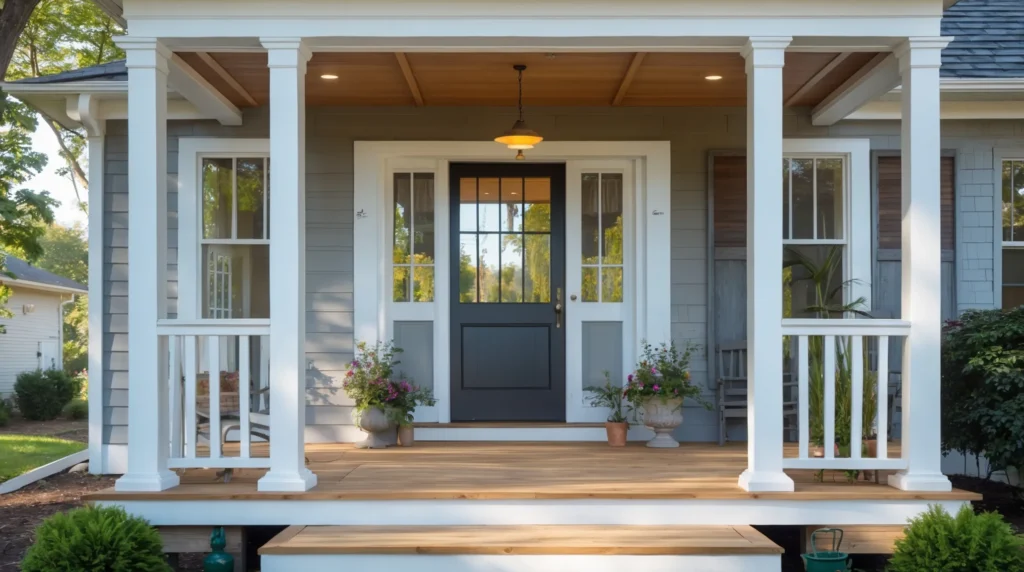
If you’re adding a porch to your home, start by checking the foundation. It must align with your house’s base to prevent shifting. You’ll also need to match materials, colors, and style so the new porch blends seamlessly with the existing structure.
Attaching the porch securely to the house is essential. Use strong anchors and flashing to prevent leaks where the two meet. Before construction begins, always check local codes for permits and height restrictions.
A well-planned porch installation adds value and beauty while maintaining your home’s original charm.
DIY Porch Projects vs. Professional Installation
Many homeowners dream of building their own porch. A DIY porch can be rewarding, but it takes skill, time, and the right tools. If you’re handy with carpentry and comfortable working outdoors, a small porch project might be within reach.
However, professional installation brings peace of mind. Experts know how to design safe structures, manage permits, and handle complex work like roofing and electrical wiring. Companies like Elements Home Exteriors combine craftsmanship with experience to ensure every detail is handled properly from framing to finishing.
DIY is great for learning and saving money, but professional porch builders deliver long-term quality and safety.
Porch Design and Construction Ideas on a Budget
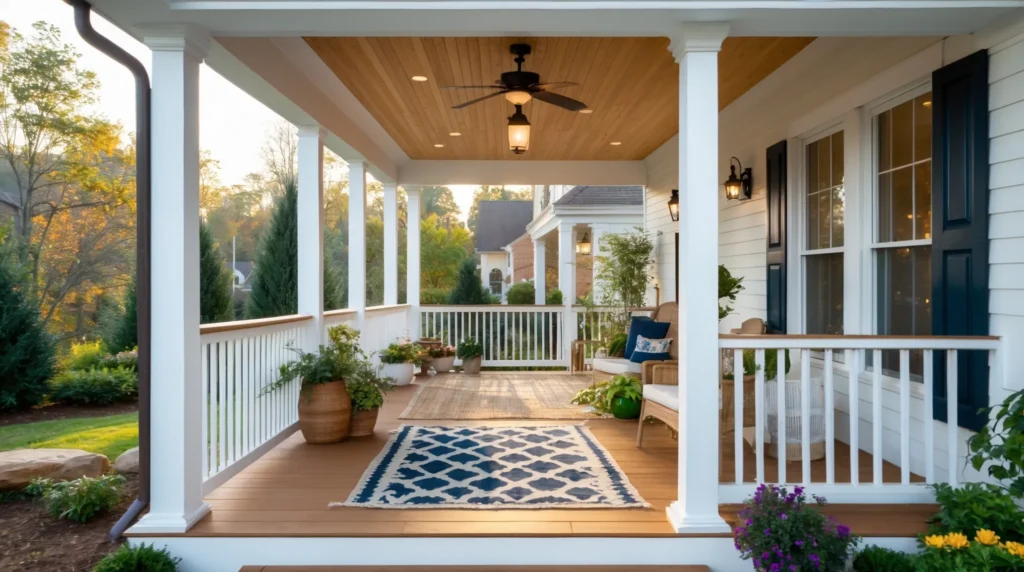
Building a porch doesn’t have to cost a fortune. With a little creativity, you can design a beautiful space on a modest budget. Start small; even a small front porch can make a big difference. Use simple railings and natural wood instead of elaborate materials. A porch deck construction made of treated lumber is cost-effective and durable.
Add personality with décor rather than structure: outdoor rugs, string lights, potted plants, and cozy seating. If you already have a small porch, adding a porch roof or shade awning can make it feel brand-new without rebuilding.
Budget doesn’t mean boring; it just means smart planning and thoughtful design.
Expert Porch Construction and Design Services in Fairfax County, VA
For homeowners who want guaranteed quality, hiring professionals is the best route. In Fairfax County, VA, Elements Home Exteriors is known for excellence in porch construction and exterior home design.
Their experienced team helps homeowners plan, design, and build porches that match their home’s style and structure. From front porch construction to custom roofing, they handle every detail with precision. Whether it’s a classic wraparound porch or a modern deck-style build, their craftsmanship ensures beauty and durability.
With professional help, your porch becomes more than an addition; it becomes a natural extension of your home.
Building a Porch That Lasts: Maintenance and Long-Term Benefits
A well-built porch lasts decades, but it still needs care. Keep it clean by sweeping off dirt and leaves. Wash wooden floors once a year and re-seal or repaint them every few seasons. Check for loose boards, cracked posts, or rusted nails and replace them promptly. Good maintenance protects your investment and prevents costly repairs. Regular care also keeps your porch safe for family and guests. Over time, the rewards are clear: a beautiful, functional outdoor space that’s always ready to enjoy.
Porches don’t just improve how your home looks; they improve how it feels. Whether it’s the sound of rain on the roof or a quiet morning coffee outdoors, a porch adds peace, warmth, and value to your everyday life.
Ready to build or upgrade your porch? Reach out to Elements Home Exteriors today. Their team will guide you through design, materials, and installation to create a porch that fits your vision perfectly. Build comfort, beauty, and value into your home one step at a time.